Getting to know you
How very strange the start to this school year has been, compared with last year’s! But small children live in the present and what happens right now is what’s normal for them, regardless of what we might feel as adults. September is always a time of new beginnings, change and a sense of moving forward. Old friends from last year have started school, and new, younger friends have arrived to take their places. So right now the priority is for us to support the new children to settle in.
Learning everyone’s names
The most important thing is for the new children to get to know who everyone is as quickly as possible. Three to six year olds are only just acquiring social skills. They’re still learning what being friends means, and how to make friends, and they need help to do this. A first step is to be confident in knowing everyone’s name. This avoids a situation like that observed the other day, where one child pointed to another and asked, ‘What’s that one called?’
So introductions are very important. When we gather in a group at the end of the morning Kim invites each child to come and stand beside her and reminds the children who this friend is, saying their name clearly and giving a little snippet of information about them, that they have a new baby brother, for example, or that their favourite football team is Southampton.
If a child doesn’t want to stand beside Kim, that’s fine. We know from experience that by making this part of the daily routine for a time, it won’t be long before all the children are keen to come forward, and quickly begin to volunteer information themselves.
Giving us information about your family
This is why the information that we ask you for as a parent is really helpful. When we ask you to give us details of the family we’re not prying! We just need to know a bit about your child’s family life to make this settling-in process easier. It really helps a new child if we know the names of their siblings and something of the family routine, so that we can say things to reassure them like, ‘Mummy’s at work this morning, isn’t she, and then she’s going to see Nanny Jean, and then she’ll come and pick you up.’
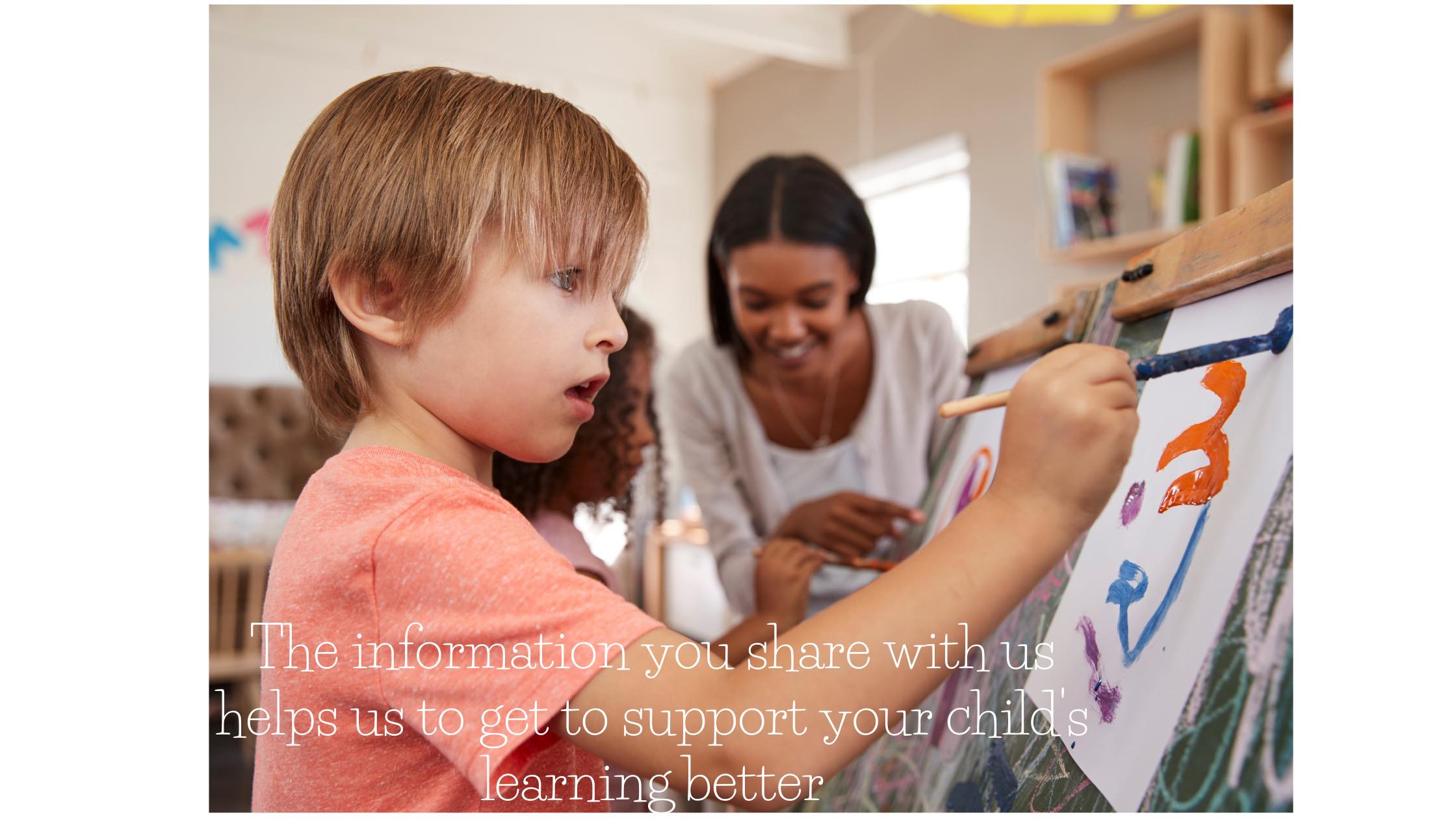
Going forward, information you share with us helps us to know how best to respond when family circumstances change, when a beloved pet dies for example, or a house-move is planned. So filling in the details in ‘My Unique Child’ is really useful and forms part of your child’s on-going learning story.
Bridging the gap between home and school
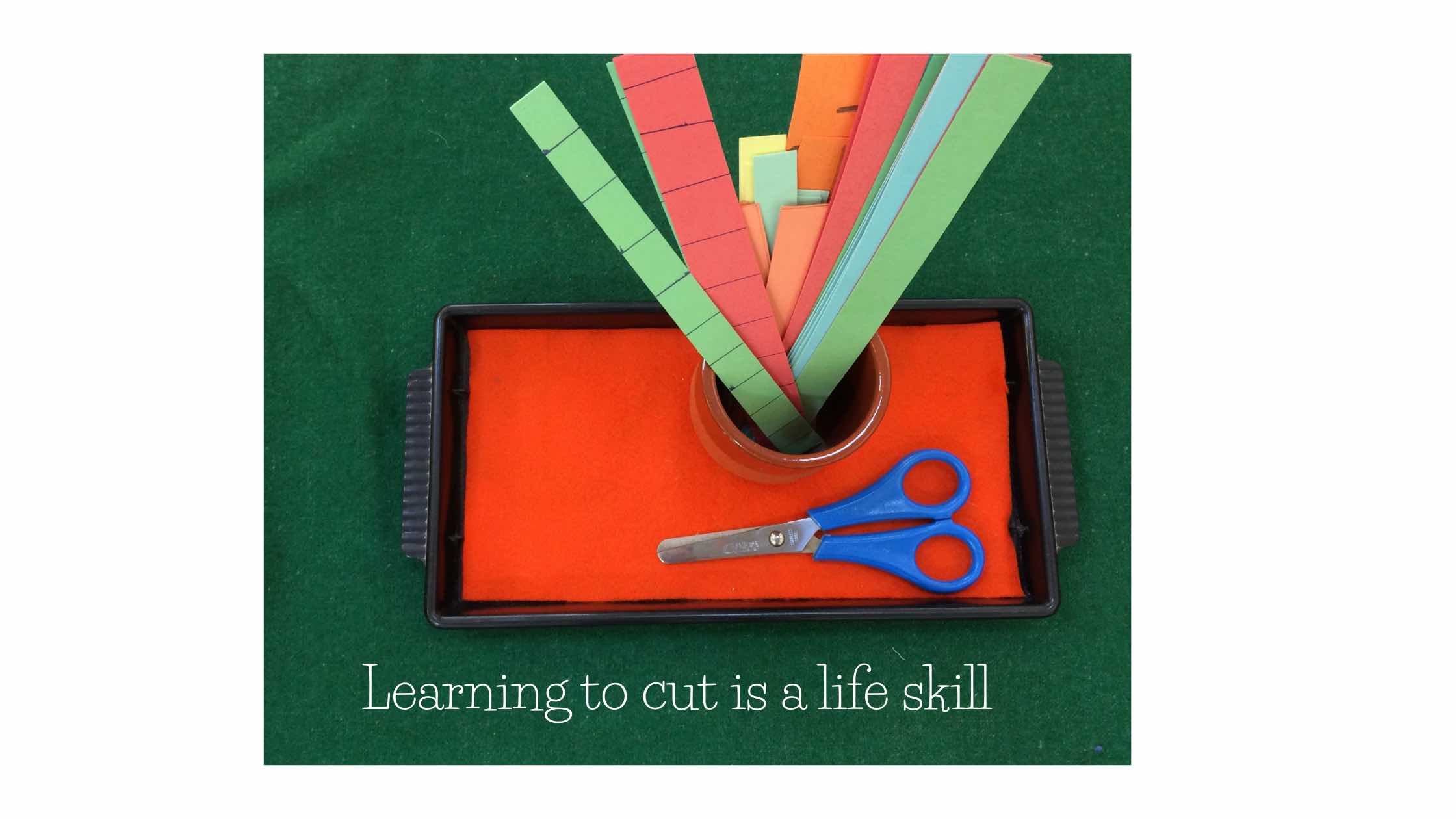
The first activities we introduce the new children to are ‘practical life’ ones, designed to help the children to become confident and independent in their new environment. These activities all involve repetition of movement, because this is how connections in the brain are made, which are essential to learning. The activities are all ones the children will have seen done at home, but may not ever have had a chance to do themselves, pouring water into a glass for example, or scrubbing a table. Directing their movements to do real, familiar jobs with scaled-down, real rather than toy equipment, is both exciting and satisfying for the children and helps them to see Seedlings as a home from home.
Grace and courtesy exercises
The introductions are reinforced when we sing the Hello Song, acknowledging each child in turn by name and asking ‘How are you today?’ This is one of our first Montessori ‘grace and courtesy exercises’, which enable children to learn the social conventions of the society of which they are part.
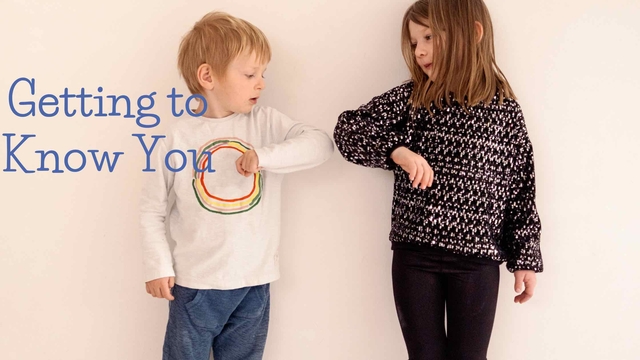
Covid19 has dramatically altered these conventions – we no longer shake hands or hug as a greeting, so we have to demonstrate touching elbows, or giving virtual hugs instead. Another child was heard to remark, ‘I can’t hug my teachers yet. I’ll do a virtual hug!’ and opened her arms out wide.
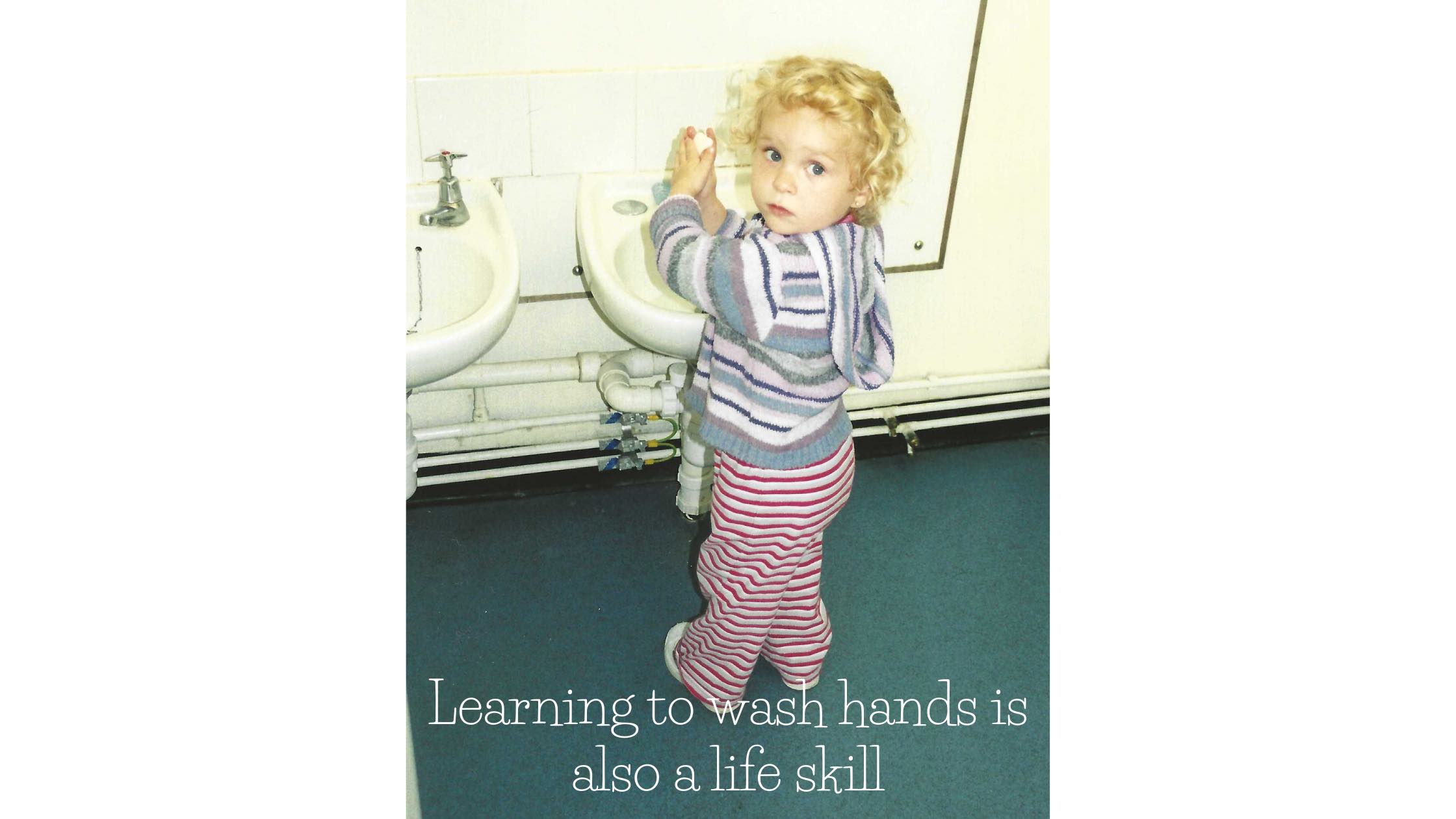
Because of Covid19 we can no longer invite you into the classroom, and we know that everyone is still nervous about staying safe, so we need to reassure you that we are taking hygiene measures very seriously indeed. But a big part of this is showing the children how to wash their hands, how to cough into their elbow, and how to blow their nose, bin the tissue and wash their hands immediately afterwards.
Stay vigilant for symptoms of Covid19
Although it seems that children who catch Coronavirus are not generally very ill with it, there have been some cases of small children becoming seriously ill and so we all need to be on the lookout for:
- Cough
- High temperature
- Rash
- Red blotches
Symptoms vary, but anything unusual should be checked out, and if your child has a cough, even if it’s not Coronavirus, please don’t bring them to Seedlings until they’re better.
Like this we’ll all stay safe!