What are we doing to get ready?

What are we doing to get ready?
Christmas is really exciting for children. We need to remember though, that until they are about 6 they have a very hazy understanding of time, and so, if we start telling them about Christmas weeks in advance, they can get confused and disappointed when the things we’ve talked about don’t happen immediately. At Seedlings we try not to get them too excited too far in advance, and this is why it might look as if we’re being a bit low key over the next couple of weeks.
 
But gradually we are getting into festive mood! We’re teaching the children some lovely seasonal poems and rhymes. Do you know these ones? Try and practise them with your little one at home because songs and rhymes are really important for laying a basis for literacy later on. They build vocabulary and connect children with the intonation and musicality of their language.
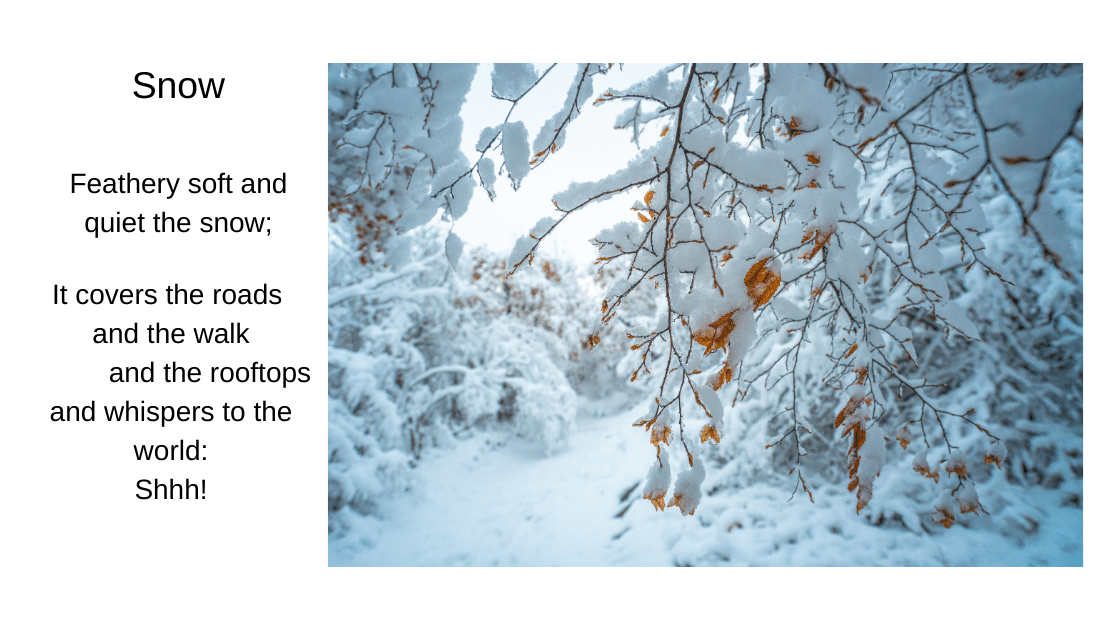
Snow

 And here’s a fun one about a snowball:

Snowball

Snowball

     I made myself a snowball

   As perfect as could be.

   I thought I’d keep it as a pet     

   And let it sleep with me.

   I made it some pyjamas

   And a pillow for its head.

   Then last night it ran away    

   But first – it wet the bed!

But stories are the bedrock of literacy. The more you can read to your child in the early years, the better a foundation you’re laying for their future success, not just in literacy but in all areas of the curriculum. So if you do nothing else over the holidays take time to read to your child. 

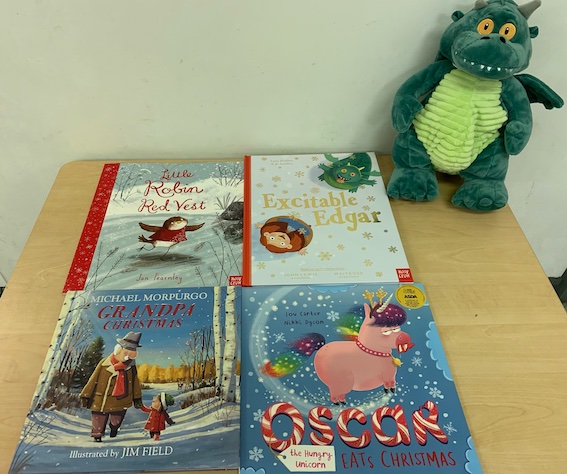
Christmas books

These are just a few of the favourites with Christmas themes we’re reading with the children right now. We include a retelling of the nativity story, so that they get an understanding of what the festival of Christmas is really celebrating. And because in the early years we try to give concrete representations of abstract concepts to strengthen understanding, the nativity creche is an important part of Christmas at Seedlings.

What are we doing to get ready?

Christmas is a great season for arts and crafts, and we have a number of projects that we’ll be working on with the children. But we need always to keep in mind that for them the interest lies in the process of making something and not the end result. As grown-ups, we need to be careful not to judge what the children have done, either positively or negatively, because to the child it’s not really important. If we can think of art and craft as an expression in the moment, our responses to what the children have been doing will hit the right note, and not baffle them or discourage them.
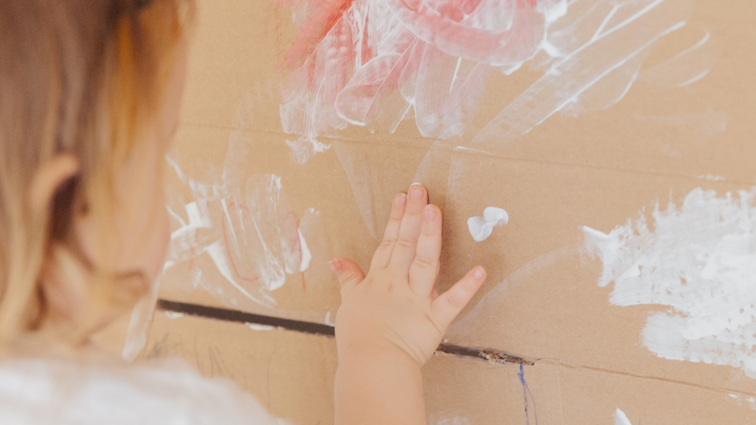
Expression in paint 3
Art is personal, it’s not done ‘for’ other people. It’s done by the children in response to what they are feeling or experiencing right now. No-one’s producing a masterpiece, but equally no-one’s work is rubbish. The response of a parent some years ago, ‘Oh no, not another one! There’s no room on the fridge, so this one will be going straight in the bin!’ was inappropriate on a number of levels. Firstly because of judging the art from an adult perspective; secondly, for thinking it needed to be displayed, which the children don’t care about; and thirdly, to have made these disparaging remarks within earshot of the child.
 
So don’t attach too much importance to what the children bring home, if anything, because they don’t always even want to bring the things they’ve created home. Remember it’s a reflection of an enjoyable learning process and not a work of art and say less, rather than more in response to it. Keep in mind that your child’s view of what he or she has done is the beginning of self-evaluation – a very important life skill. And at Christmas there are many opportunities to develop this.
What are we doing to get ready?