

Preparing to Celebrate
The weather’s suddenly turned much colder, the days are shorter and we’re on the run-up to Christmas. Usually Christmas is the bright spot at the end of a very long term, but this year, with everyone watching their money and their use of energy, it looks like being less extravagant, less cosy, but maybe even less frenzied.
Certainly, for the children, this will not be a bad thing, and specially for the youngest ones less is definitely more! Small children like predictability and routine. They like to do familiar things over and over again and they take life one day at a time. The intense and varied excitement of any festive season, not just Christmas, is likely to overwhelm them, making them unusually stressed, cross and tired. So, here are some key things to keep in mind as you make festive preparations.
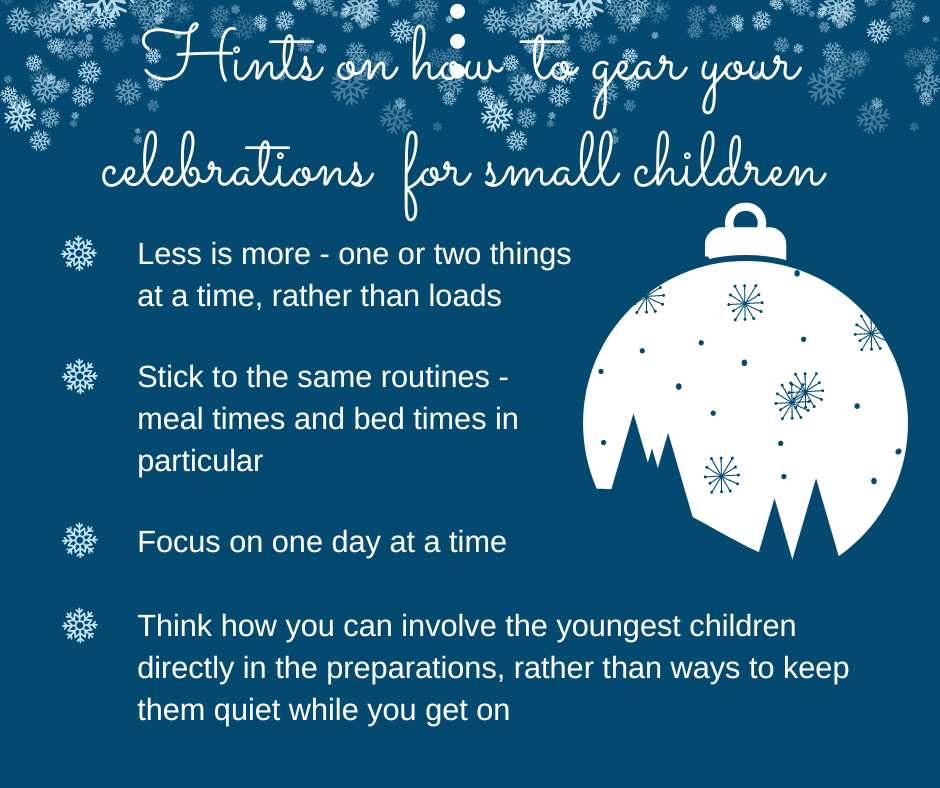
Less is more
Simple, inexpensive presents work best for small children. We’ve all experienced how often the packaging and the wrapping paper interests them more than the gift inside! And too many presents all at once are overwhelming, so a suggestion is to spread the giving of the gifts over a number of days, so that the excitement of opening a parcel to see what’s in it, and explore the contents is something that is repeated a number of times. Remember how important repetition is for this age group, and how it’s the process they’re interested in, rather than the outcome!
They also have no understanding of the value of anything, so don’t stress if right now you can’t afford the present you’d dearly like to give them. Choose something affordable and durable and you’ll enjoy their enjoyment of it long after Christmas has passed.

Sticking to routines
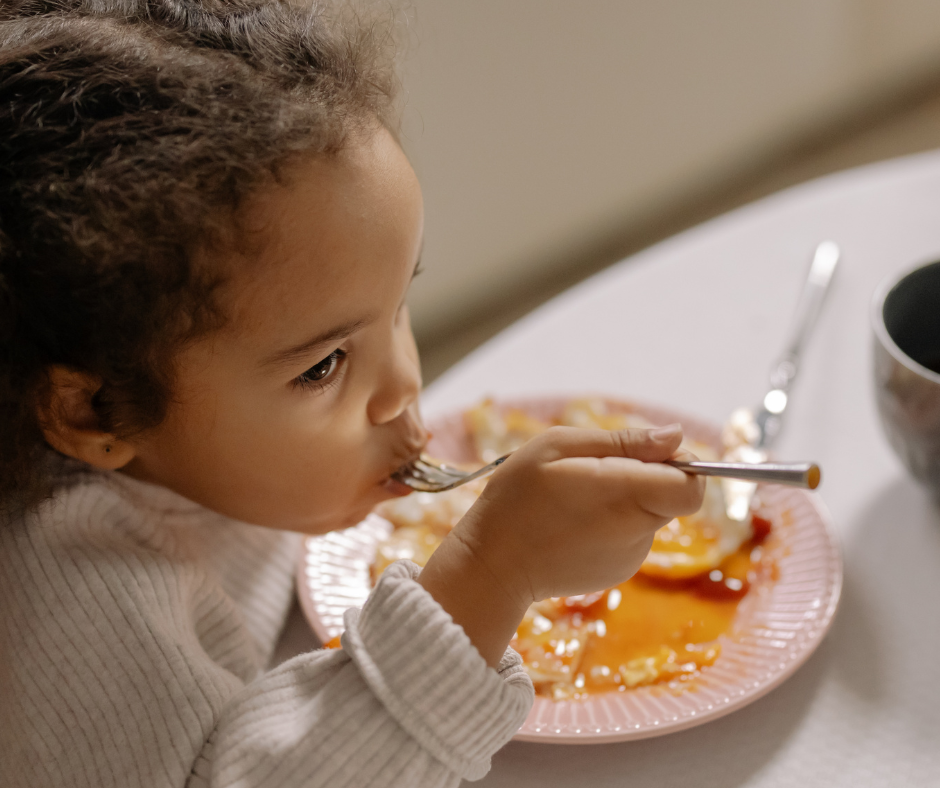
The routine of the day is reassuring to small children. Their sense of the actual passing of time is still very hazy, but predictable routines are a security because they give the children a pattern for what usually happens each day. They will cope better with the celebrations if the points in the day, mealtimes and bedtime, are kept to and they are less likely to become tired and grumpy or over-excited.
Taking one day at a time
Small children’s inability to understand time spans means that it works much better to focus on one day at a time, rather than trying to get them to understand what’s going to be happening each day of the holidays. Long explanations of the family calendar wash over them. Just talk about today, and tomorrow, so they are clear what is going to be happening very soon, and know what to expect. Like that, if your plans have to change they are less likely to be upset and disappointed, and you won’t feel you’re letting them down.

Getting everything done
Preparations for any celebration, whether it’s a small family event or a bigger celebration over several days involving lots of different people, extended family and other visitors, are complex and tiring for everyone. If you’re the person doing all the work, you’re going to aim to get it done as quickly as possible, but usually that means keeping the children occupied so they’re not under your feet.
Why not change your strategy here? You could think about taking a slower and simpler approach. You could aim to do less, and plan ways to involve your children in what you’re doing, rather than excluding them. You could find that by preparing, making, decorating and working together you have the best Christmas ever!